Looking at homes in Awbrey Butte or Awbrey Glen and wondering why they feel so distinctive? It is not just the views, the pines, or the golf-course setting. In these Northwest Bend communities, architecture is shaped by the land itself, along with design rules that favor muted materials, controlled massing, and homes that sit naturally in the landscape. If you want to understand what gives these neighborhoods their visual identity, this guide will help you spot the styles, features, and setting-driven details that matter most. Let’s dive in.
Why architecture feels different here
Awbrey Butte and Awbrey Glen are both on Bend’s northwest side, but they do not present exactly the same way. City planning materials identify Awbrey Butte as a neighborhood district in Northwest Bend and note that it is the highest point in Bend at 4,214 feet, with origins as a basalt volcanic vent. That elevation and terrain help explain why so many homes are designed around slope, light, and long-range views.
Awbrey Glen, also in Northwest Bend, has a more club-centered setting. Current community materials describe it as a golf community framed by pines, course views, and amenities like dining, fitness, and social spaces. That backdrop creates a more unified architectural feel, even though the homes still span several style categories.
Awbrey Butte style overview
Awbrey Butte does not revolve around one single architectural label. Recent neighborhood and listing examples point instead to a mix of contemporary, Craftsman, New Traditional, Prairie-inspired, and lodge-leaning custom homes. The common thread is that the homes tend to feel site-specific, grounded, and tailored to the hillside rather than overly formal or decorative.
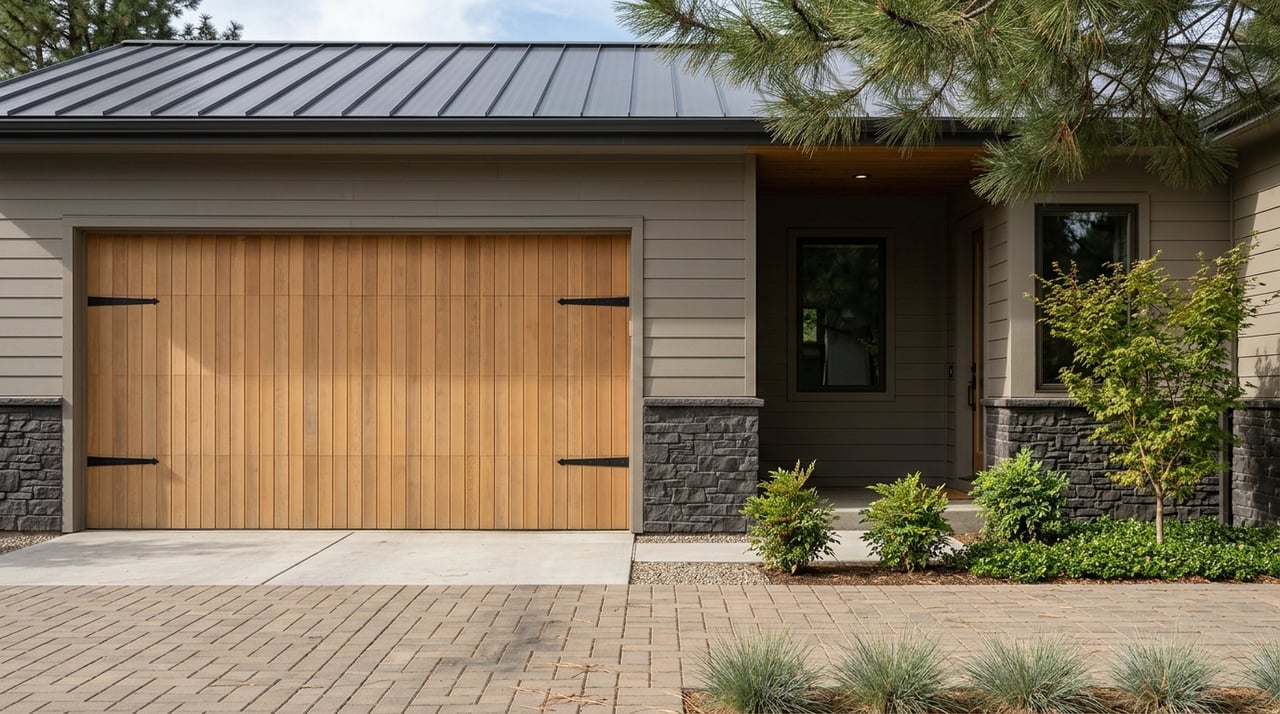
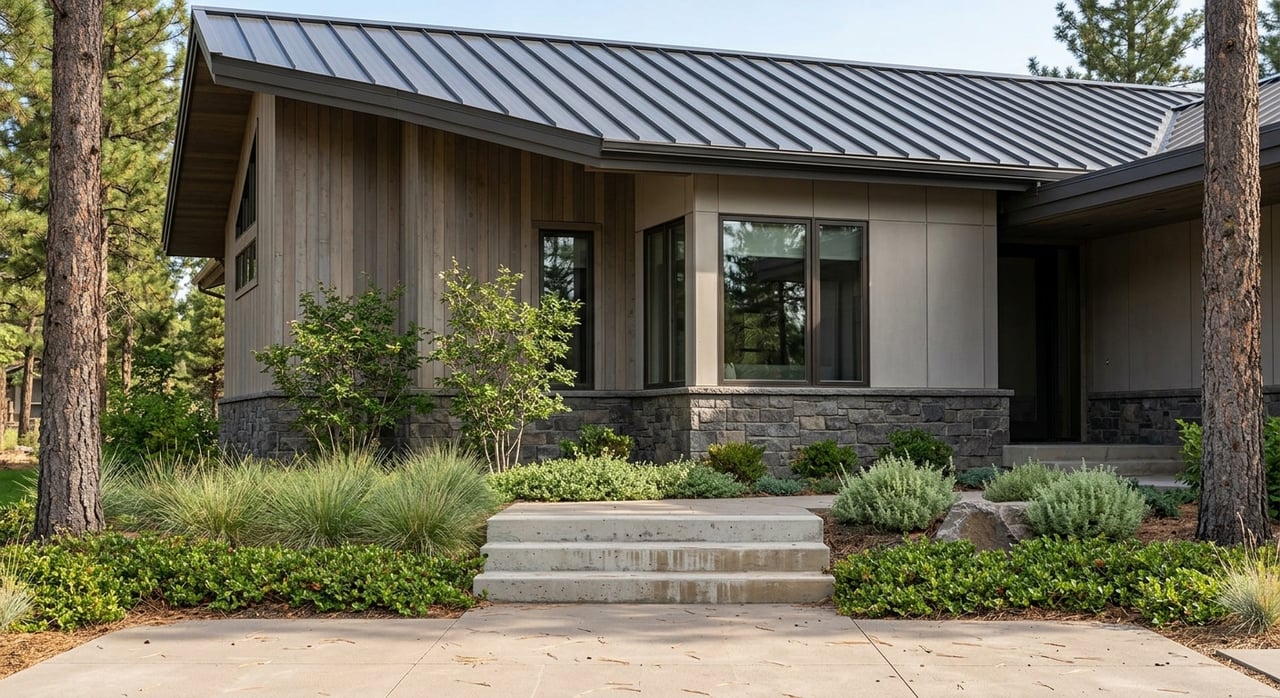
That mix makes sense when you look at the design guidelines. Exterior colors are expected to stay in medium-to-dark earth tones, roof pitches are generally encouraged to be at least 4/12, and approved materials include stone, brick, stucco, wood, and fiber-cement products. The result is a neighborhood character that feels restrained, durable, and connected to the natural setting.
Contemporary and Northwest contemporary
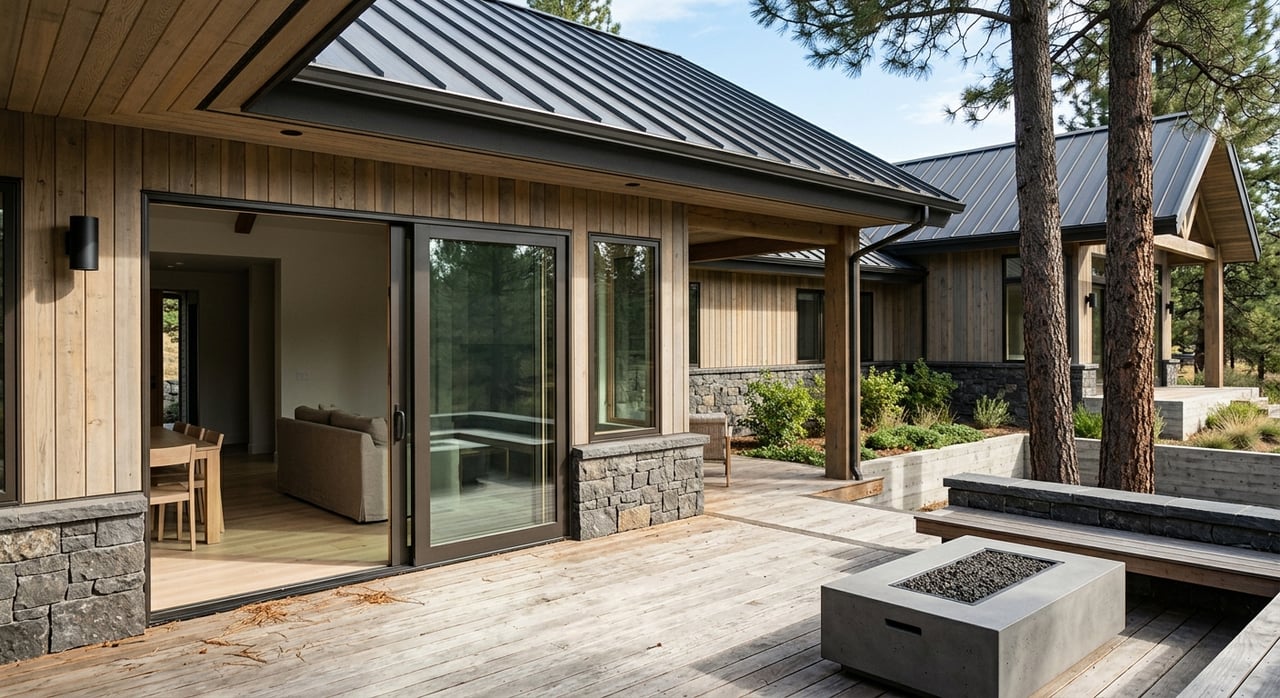
One of the clearest styles in Awbrey Butte is contemporary, especially Northwest contemporary. Listing examples often highlight expansive windows, clean rooflines, open layouts, and decks oriented toward Cascade or city views. These homes usually focus less on ornament and more on glass, proportion, and connection to the outdoors.
On a hillside lot, that approach works well. Broad glazing brings in light, while decks and outdoor spaces help extend the living area toward the view. In Awbrey Butte, contemporary design often feels warm and grounded rather than stark because it is paired with darker colors and natural materials.
Craftsman and New Traditional
Craftsman and New Traditional homes also show up throughout Awbrey Butte. These properties often include front porches, mixed exterior materials, visible gables, and more articulated facades. Compared with a pure contemporary home, they tend to read as more classic and more detailed from the street.
Even so, they still fit the neighborhood’s broader visual language. The HOA’s emphasis on compatible scale, restrained massing, and natural-looking materials helps keep these homes from feeling out of place. In practice, that means even more traditional designs still look rooted in the butte’s terrain and views.
Prairie and lodge-inspired custom homes
Some of Awbrey Butte’s most distinctive homes lean toward Prairie or Wright-inspired design, sometimes with lodge influences. These homes may use strong horizontal lines, timber accents, stone fireplaces, and broad decks that visually connect the structure to the site. The look is often low-slung, custom, and view-aware.
This style can feel especially at home on larger or more dramatic lots. Horizontal lines echo the landscape, while stone and wood elements reinforce a mountain-west sensibility. It is one reason Awbrey Butte often feels eclectic in a refined way rather than stylistically scattered.
Awbrey Glen style overview
Awbrey Glen shares some of the same design vocabulary, but its architectural identity is usually more cohesive. Current examples point to contemporary, Craftsman, Northwest, lodge-inspired, Prairie-inspired, and occasional Spanish-style custom homes. Still, the broader impression is more curated than eclectic.
The golf community setting plays a big role in that feel. Community materials describe Awbrey Glen as a gated neighborhood with an 18-hole course, pines, and a range of club amenities. That setting encourages homes that feel polished, orderly, and visually connected to shared open space.
Lodge and refined Northwest character
Many Awbrey Glen homes read as mountain-lodge or refined Northwest in style. Listing examples often mention generous glazing, timber beams, stone fireplaces, and strong indoor-outdoor flow. These features complement the pines, fairways, and open-edge views that shape much of the neighborhood.
This does not mean every home looks the same. It means the homes often share a similar palette of materials and a similar relationship to the site. That consistency can make the neighborhood feel more planned and visually unified from one street to the next.
Contemporary and Prairie influences
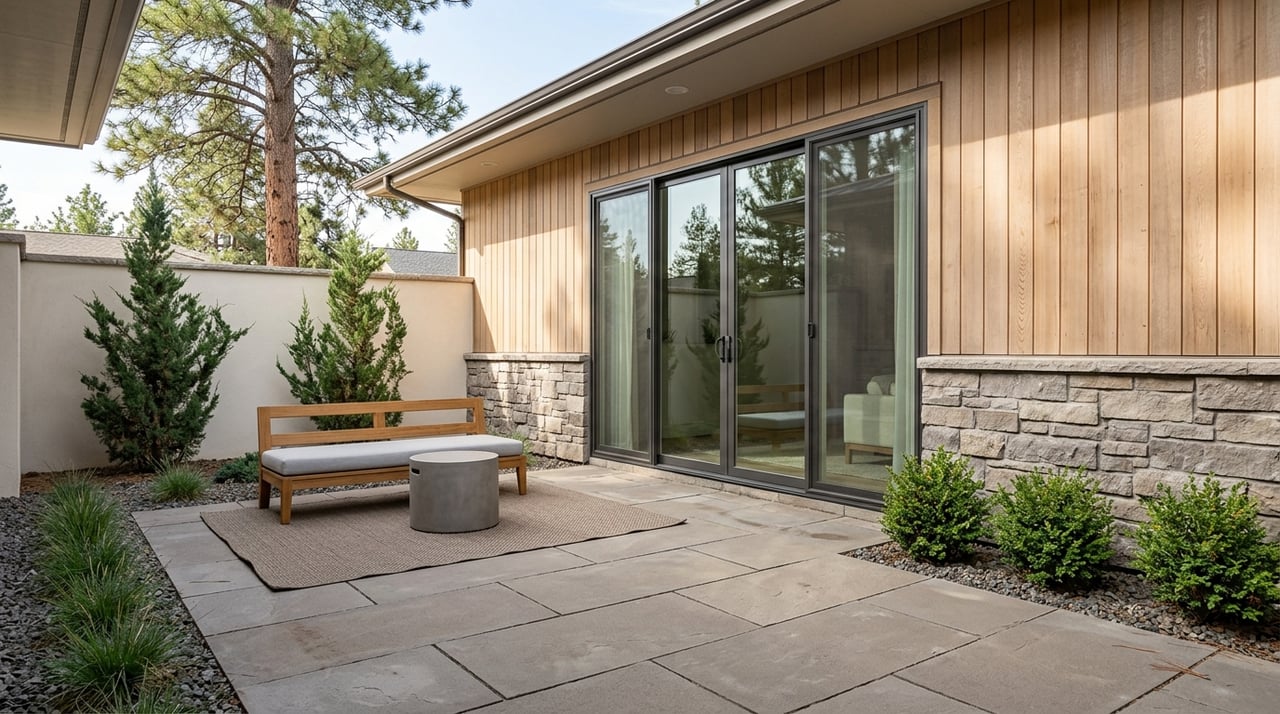
Contemporary and Prairie-inspired homes are present in Awbrey Glen as well. You may see clean lines, broad roof forms, and strong horizontal emphasis, especially in custom homes that open toward golf-course or territorial views. These designs tend to balance modern simplicity with warmer, natural finishes.
Because the neighborhood guidelines limit certain exterior treatments and encourage attached or visually attached garages, these homes still fit within a controlled overall appearance. Even a more modern property usually feels softened by stone, wood, and earth-toned finishes.
The design rules behind the look
A big part of what defines both neighborhoods is not just style, but the rules that shape how homes are built and landscaped. In both communities, exterior colors are generally expected to stay in medium-to-dark earth tones. That shared approach immediately creates a calmer, more natural visual rhythm.
Material rules matter too. Both neighborhoods allow combinations of wood, cement-based siding, stone, brick, stucco, and related products, while discouraging or prohibiting materials that would look overly industrial or out of character. This helps explain why the homes often feel substantial and custom, even when their architectural styles differ.
How Awbrey Butte guidelines shape homes
In Awbrey Butte, the guidelines emphasize restraint in massing, garage presentation, height, and site disturbance. They also call for minimal grading and slope treatment that follows the existing topography. That encourages homes that work with the hillside instead of trying to overpower it.
Landscaping guidelines reinforce that approach. Homesites are expected to respect the natural environment, favor native-looking plantings, and use Firewise-style planting zones near structures. View preservation is also a stated priority, with oversight of vegetation and screening that could affect view corridors.
How Awbrey Glen guidelines shape homes
In Awbrey Glen, the design rules support a more managed and club-oriented look. Exterior colors remain earth-toned, attached garages are required or must appear attached, and height is controlled through a 30-foot average cap with no single elevation over 39 feet. Fences and walls are strongly discouraged, which helps preserve a more open visual environment.
Landscaping is also meant to feel casual and natural rather than formal. The guidelines encourage fluid planting layouts and discourage straight-line, highly regimented arrangements. Along golf-course edges and open spaces, setback and frontage rules help keep rear-yard improvements visually disciplined.
Views, light, and topography come first
If there is one true architectural signature shared by both neighborhoods, it is this: homes are designed around views, light, and the land. Across both Awbrey Butte and Awbrey Glen, the architecture tends to prioritize walls of windows, outdoor living areas, and massing choices that reduce visual impact from neighboring or downhill vantage points.
That is especially important on sloped lots. Minimal grading, careful deck placement, controlled lighting, and respect for natural features all influence the final look of a home. In other words, the most defining design choice in these communities is often not the style label itself, but how well the home fits its site.
What buyers and sellers should notice
If you are buying in Awbrey Butte or Awbrey Glen, it helps to look beyond broad style terms like contemporary or Craftsman. Pay attention to rooflines, exterior materials, window orientation, deck placement, landscaping, and how the home meets the lot. Those details often tell you more about whether a property feels true to the neighborhood than the listing label alone.
If you are selling, presentation matters in a similar way. Homes that feel integrated with the neighborhood’s muted palette, view orientation, and landscape-sensitive design are likely to read as more native to these communities. That matters because buyers shopping in these areas are often responding as much to setting and fit as they are to square footage.
Awbrey Butte vs. Awbrey Glen at a glance
The simplest way to compare the two is this: Awbrey Butte tends to feel a bit more hillside-custom and visually varied, while Awbrey Glen tends to feel more cohesive and club-residential. Both favor custom, view-aware homes with natural materials and restrained colors. They just express those priorities a little differently.
For many buyers, that distinction helps narrow the search. If you like a slightly more eclectic mix tied closely to dramatic topography and broad views, Awbrey Butte may stand out. If you prefer a more unified setting shaped by golf-course edges, gated entry, and a polished Northwest lodge feel, Awbrey Glen may be the better fit.
Whether you are comparing neighborhoods, preparing to sell, or looking for a custom home that fits your lifestyle, local context matters. For thoughtful guidance on Awbrey Butte, Awbrey Glen, and other distinctive Bend neighborhoods, connect with Lisa Cole.
FAQs
What architectural styles are most common in Awbrey Butte?
- Awbrey Butte commonly features contemporary, Craftsman, New Traditional, Prairie-inspired, and lodge-leaning custom homes, with a strong focus on views, hillside siting, and natural materials.
What architectural styles define Awbrey Glen?
- Awbrey Glen includes contemporary, Craftsman, Northwest, lodge-inspired, Prairie-inspired, and some Spanish-style custom homes, but the overall look is generally more cohesive and club-oriented.
Why do homes in Awbrey Butte and Awbrey Glen use earth-tone colors?
- Both neighborhoods have design guidelines that require or favor medium-to-dark earth-toned exterior colors, which helps homes blend with the natural setting and creates a consistent visual character.
How do Awbrey Butte design rules affect home appearance?
- Awbrey Butte guidelines encourage minimal grading, restrained massing, compatible materials, Firewise-style landscaping, and view preservation, all of which shape a grounded, hillside-custom look.
How do Awbrey Glen design rules affect home appearance?
- Awbrey Glen guidelines promote attached garages, controlled heights, natural-looking landscaping, limited fencing, and disciplined golf-course edge treatment, which supports a polished and unified neighborhood feel.
What should buyers look for in Awbrey Butte or Awbrey Glen homes?
- Buyers should pay close attention to how a home fits its lot, captures light and views, uses exterior materials, and connects indoor and outdoor spaces, since those details are central to both neighborhoods’ appeal.