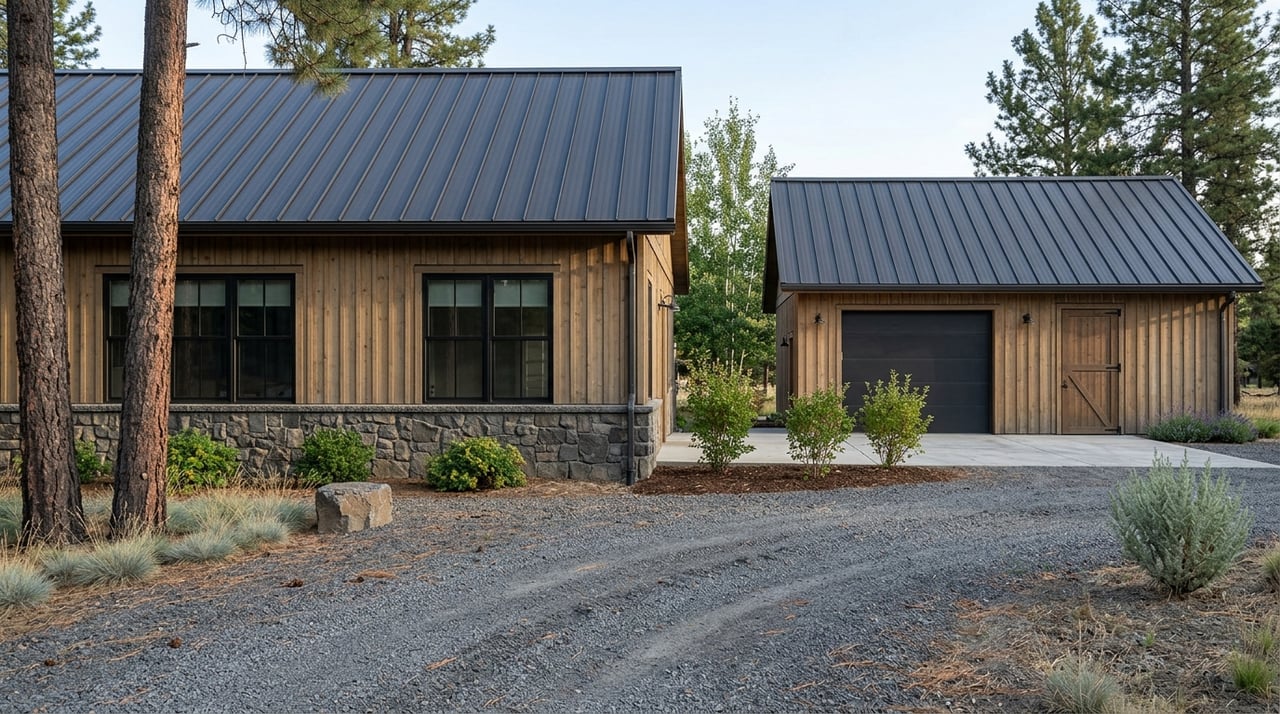
If you are dreaming about elbow room in Central Oregon, Tumalo and Bend can look similar at first glance. Both put you near the Deschutes River corridor, outdoor recreation, and the broader Bend lifestyle, but they are built for very different kinds of living. If you are trying to decide where acreage makes the most sense for your goals, this guide will help you compare land, zoning, utilities, and everyday lifestyle so you can choose with more confidence. Let’s dive in.
Tumalo vs. Bend at a glance
The biggest difference is simple: Tumalo is planned as a rural community, while Bend is planned as a city.
Tumalo is an unincorporated community in Deschutes County, and its community plan emphasizes preserving rural small-town character, agricultural activity, and open space. The plan also notes that local businesses, district offices, Tumalo Community School, and Tumalo State Park help create a local hub for residents and visitors.
Bend operates inside an urban growth boundary, or UGB. The city’s growth planning is centered on housing, jobs, transportation, and water and sewer systems, with the UGB designed to help protect surrounding farm and forest land. In practical terms, Bend is structured around urban services and infill rather than traditional acreage living.
Where true acreage is more common
If your priority is larger parcels with a more rural feel, Tumalo usually offers the clearer path.
Deschutes County planning documents identify Residential 5-acre lands around the Tumalo community perimeter. The county also says the Tumalo Residential District, or TuR5, is intended to retain larger rural residential lots. That framework supports the kind of land pattern many acreage buyers are looking for.
Nearby county zones often tied to the Bend and Tumalo area also support rural living. RR-10 and MUA-10 both allow agriculture, accessory dwelling units, and small-scale horse stables, with 10 acres as the standard land division size. UAR-10 also uses a 10-acre standard and is intended as a transition between urban and rural development near Bend’s urban growth boundary.
Inside Bend city limits, the lot pattern is much more urban. The city’s residential district guide shows RL lots at 10,000 square feet and RS lots at 4,000 square feet, with density ranges that align with city neighborhoods rather than rural homesites. That means true acreage inside Bend is limited and often found in edge areas or transitional districts.
Why zoning matters more than the listing photos
A property can look rural online and still have limits that affect how you use it. That is why zoning should be one of your first filters, not one of your last.
In Tumalo-area county zones, buyers may find support for agriculture, horses, ADUs, and larger lot patterns depending on the specific designation. The Tumalo community plan also states that livestock may be permitted in residential districts, subject to limitations. For buyers who want flexibility for a barn, animals, or a more functional rural setup, that can be a major advantage.
At the same time, not every large-looking parcel can be split or developed further. Deschutes County notes that many parcels were created before current zoning rules and may be smaller than today’s minimum lot size. A parcel may be legally nonconforming, which can affect whether it is eligible for further subdivision.
Water and sewer are a major dividing line
Utilities are often the biggest lifestyle separator between Tumalo and Bend.
In Tumalo, service can vary from one property to the next. Some properties are served by the Laidlaw Water District, while others outside the district rely on private domestic wells. Historically, Tumalo did not have a community wastewater facility, and the county’s 2024 Rural Housing Profile reports that the Board of County Commissioners approved a petition for a Tumalo Sewer District in August 2024 after a feasibility study focused on continued reliance on onsite septic systems.
In Bend, properties are generally built around municipal service. The City of Bend says water, sewer, and stormwater services are combined into one bill, and new sewer connections are regulated by city code. If a property is not served by City of Bend Water, the city guide says a will-serve letter is required from the serving water district.
For you as a buyer, this comes down to preference. Tumalo may offer more rural flexibility, but it can also mean more due diligence around wells, irrigation access, septic systems, and future district service. Bend often offers a more standardized utility setup, but it comes with a more urban framework.
Site standards feel different in Bend
Even when a Bend property has extra space, it may still function more like a city home than a rural property.
Bend’s residential guide says driveways and parking areas must be paved with an approved hard surface, and gravel is not permitted. Sidewalks may also be required depending on existing conditions. Those standards may not be a problem for some buyers, but they do shape the day-to-day feel of the property.
If you picture a more relaxed rural setup with varied outbuildings, animal use, and less formal site design, Tumalo often aligns better with that vision. If you want land while staying closer to city-style systems and standards, Bend-adjacent options may make more sense.
Horses, hobby farms, and land use goals
For horses, hobby farming, or agricultural use, Tumalo is usually the stronger fit.
County zone summaries show that RR-10 and MUA-10 allow agriculture and small-scale horse stables. The Tumalo community plan also supports livestock in residential districts, subject to limitations. On top of that, the Tumalo Irrigation District serves more than 7,400 acres, waters pastures for livestock, and provides stock runs in winter.
That agricultural context is part of what makes Tumalo distinct. The community plan also notes the importance of protecting nearby Exclusive Farm Use areas and ensuring that new uses do not harm surrounding agricultural land. For buyers, that means Tumalo can offer a more authentic rural-use setting, but it also calls for careful review of irrigation, water rights, setbacks, and what is legally allowed on the property.
Bend-adjacent acreage can still work for some buyers who want a garden, extra storage, or a little more breathing room. But the closer a parcel is to Bend’s urban code and development model, the more likely it is to feel like a larger suburban homesite rather than a true rural property.
When Tumalo makes more sense
Tumalo is often the better choice if your priorities include space, privacy, and a property that supports a rural lifestyle.
You may prefer Tumalo if you want:
- Larger lots with a clearer acreage identity
- Rural small-town character and open space
- Zoning that may support agriculture, horses, or livestock, depending on the parcel
- Irrigation potential or proximity to an agricultural setting
- More separation from urban site standards and denser neighborhoods
For many relocation buyers and second-home buyers, Tumalo also offers something hard to quantify but easy to feel: a stronger sense of being rooted in the land rather than simply owning a larger lot near town.
When Bend acreage makes more sense
Bend or Bend-adjacent acreage may be the better fit if you want more land without giving up easy access to city systems and amenities.
You may prefer Bend-adjacent property if you want:
- Closer proximity to Bend’s commercial areas and daily services
- Municipal water, sewer, and stormwater in many locations
- A property that feels easier to manage from an infrastructure standpoint
- A larger homesite while staying connected to an urban lifestyle
- A transitional option between suburban and rural living
This can be especially appealing if you are relocating and want extra room, but do not want the full complexity that sometimes comes with wells, septic systems, irrigation questions, or rural zoning review.
Questions to ask before you buy
No matter which area you prefer, acreage purchases deserve careful property-specific review. Two homes that seem similar on paper can function very differently once you dig into zoning and service details.
Before you move forward, ask:
- Is the parcel in Tumalo, in Bend city limits, or in a county zone near Bend?
- How much of the land is true acreage versus a larger residential lot?
- What zoning applies to the property today?
- Does the zoning allow horses, livestock, ADUs, a barn, or a shop?
- Is the property served by city water, a water district, a private well, or irrigation water?
- Is wastewater handled by sewer, a future sewer district, or an onsite septic system?
- Is the parcel legally subdividable, or is it an older lot that may not be split further?
- How close do you want to be to Tumalo State Park, the Deschutes River corridor, and Bend’s broader trail and amenity network?
These are the details that shape both your lifestyle and your long-term options.
The best choice depends on how you want to live
If your ideal property includes horses, pasture, irrigation potential, and a true rural backdrop, Tumalo will often rise to the top. Its planning framework, lot patterns, and agricultural setting are better aligned with classic acreage living.
If your priority is staying close to Bend’s services, shopping, and city infrastructure while still gaining more land than a typical in-town lot, Bend-adjacent acreage may be the smarter fit. The right answer is less about which area is better overall and more about which one fits your daily life, comfort level, and property goals.
With acreage, the details matter. Zoning, utilities, parcel history, and land use rules can change what a property actually offers, so having a local guide who understands both Bend and Tumalo can make the search much more efficient.
If you are weighing acreage options in Tumalo or Bend, Lisa Cole can help you narrow the field, evaluate the tradeoffs, and find a property that truly matches your lifestyle goals.
FAQs
What is the main difference between Tumalo and Bend for acreage living?
- Tumalo is planned around rural small-town character, agricultural activity, and open space, while Bend is planned around urban growth, housing, transportation, and city utility systems.
Are larger lots more common in Tumalo than in Bend?
- Yes. County planning documents for Tumalo include 5-acre residential areas and rural zones with 10-acre standard land divisions, while Bend’s city residential districts are generally much smaller and more urban in size.
Can you keep horses on acreage in the Tumalo area?
- In some county zones, yes. Deschutes County zone summaries show that RR-10 and MUA-10 allow agriculture and small-scale horse stables, and the Tumalo community plan says livestock may be permitted in residential districts subject to limitations.
Do Tumalo acreage properties have city water and sewer?
- Some Tumalo properties are served by the Laidlaw Water District, while others rely on private wells, and wastewater service has historically depended on onsite septic systems, with a Tumalo Sewer District petition approved in 2024.
Is acreage inside Bend city limits truly rural?
- Usually not in the traditional sense. Bend’s lot sizes, utility structure, and site standards are generally urban, so many larger Bend properties function more like suburban homesites than classic rural acreage.
Can every older acreage parcel in Deschutes County be subdivided?
- No. The county notes that some parcels were created before current zoning rules and may be legally nonconforming, which can affect whether they can be divided further.
What should you verify before buying acreage near Tumalo or Bend?
- You should confirm the parcel’s zoning, allowed uses, lot history, water source, irrigation access, wastewater setup, and whether it is in Tumalo, Bend city limits, or a Bend-adjacent county zone.