Dreaming about a small farmstead with room for gardens, animals, and a slower pace, but still want Bend within easy reach? That balance is exactly why Tumalo keeps showing up on buyers’ short lists. If you want a hobby farm lifestyle that feels practical, beautiful, and grounded in how the land actually works, this guide will help you think through the details that matter most. Let’s dive in.
Why Tumalo Fits Hobby Farm Living
Tumalo offers a rare mix of rural character and everyday convenience. Deschutes County describes it as a small rural community about three miles northwest of Bend, shaped by U.S. 20, the Deschutes River, established neighborhoods, a small commercial area, and community-serving destinations woven into daily life.
For many buyers, that means you can enjoy more space and a country feel without committing to full isolation. Tumalo is not positioned as a large-scale agricultural center. Instead, county planning documents frame it as a rural residential area where agricultural uses and low-intensity home occupations can fit naturally when the parcel and zoning allow them.
That distinction matters. A hobby farm in Tumalo is usually about lifestyle, land use, and site design, not simply buying acreage and hoping every idea will work.
Start With Site Fit
When you picture your ideal hobby farm, it is easy to focus on the fun parts first. You may imagine raised garden beds, a greenhouse, a barn, or a workshop. In Tumalo, those ideas need to start with one simple question: Does this specific parcel support the way you want to live?
The strongest properties are the ones where several pieces line up at once. Zoning, usable septic area, water source, irrigation access, and defensible-space planning can all affect how functional a property feels. Two homes with similar acreage can offer very different possibilities once you look more closely.
That is why parcel-specific review is so important in Tumalo. A property may look perfect at first glance, but the real value comes from how well the land supports your intended use.
Zoning Shapes Your Options
Deschutes County zoning guidance is one of the first things to review. In Tumalo, the TuR zone allows single-family homes, duplexes, low-intensity home occupations, and agricultural uses. If a parcel is not served by community water and sewer, the minimum lot size is one acre.
The TuR5 zone is different. It is intended to retain larger rural residential lots and has a five-acre minimum. That can appeal to buyers who want more separation, more open space, or greater flexibility in how they arrange outdoor uses.
County guidance also notes that many Tumalo lots were created before current minimum standards. Those lots may still be used as allowed, but they generally cannot be divided smaller. If your long-term plan includes splitting land or reconfiguring a parcel, that deserves careful review early in the process.
Setbacks Can Affect Layout
Even when a parcel has the right acreage, the layout may still be constrained. The county’s zoning summary notes a 100-foot setback from any property line adjacent to farmland. That can influence where you place gardens, shops, barns, fenced areas, or other improvements.
In practical terms, the usable part of the land may be different from the total acreage shown in a listing. A property can have plenty of land on paper but still require thoughtful placement of structures and outdoor work areas.
Water Is a Core Design Decision
Water is central to any hobby farm conversation in Tumalo. Some properties are served by the Laidlaw Water District, some rely on private wells, and some may also have irrigation water through the Tumalo Town Ditch system. Because of that, two similar properties can function very differently depending on the type of water access they have.
If a home has a private well, Oregon Health Authority says the well owner is responsible for routine testing and maintenance. In a real estate transaction involving a domestic well, the seller must test for arsenic, nitrate, and coliform bacteria and submit the required paperwork.
This is especially important for buyers who want gardens, landscaping, or a more active outdoor setup. A property’s water picture affects not only daily household use, but also how realistically you can support the kind of land use you have in mind.
Understand What Well Use Covers
Oregon Water Resources Department says exempt groundwater use includes domestic use up to 15,000 gallons per day and watering a lawn or noncommercial garden up to one-half acre. Irrigation of commercial crops is not exempt.
For a true hobby farm buyer, that distinction is helpful. If your vision is centered on personal gardening and small-scale, noncommercial use, a property may fit nicely. If you are imagining something larger or income-producing, you will want to confirm exactly what is allowed before moving forward.
Septic Can Be Just as Important as Acreage
Wastewater is often one of the biggest practical issues in rural property searches. The current Tumalo Community Plan states that the area does not have a community-wide wastewater facility and instead relies on onsite systems.
The same plan explains that most Tumalo soils are rapidly draining. Standard septic systems generally work best on lots larger than an acre, while smaller lots may require sand filters or other alternative treatment technologies.
That means the shape and usable area of the parcel can matter just as much as the size. If you are thinking about adding outdoor structures, fenced areas, or expanded gardens, you will want to understand where the septic system is, where replacement area may be needed, and how that affects the rest of the site.
Plan for Central Oregon Growing Conditions
A beautiful hobby farm in Tumalo should feel realistic in every season. Oregon State University Extension describes Central Oregon as a high-desert climate with cold winters, hot days, low humidity, and a short growing season. It also notes that the region typically receives only 3 to 6 inches of natural precipitation during the growing season.
That climate does not limit the hobby farm lifestyle, but it does shape it. In many cases, the most successful setups use practical, water-aware strategies rather than trying to force a traditional farm plan onto a high-desert site.
Smart Features for a Productive Landscape
Common approaches in Central Oregon include:
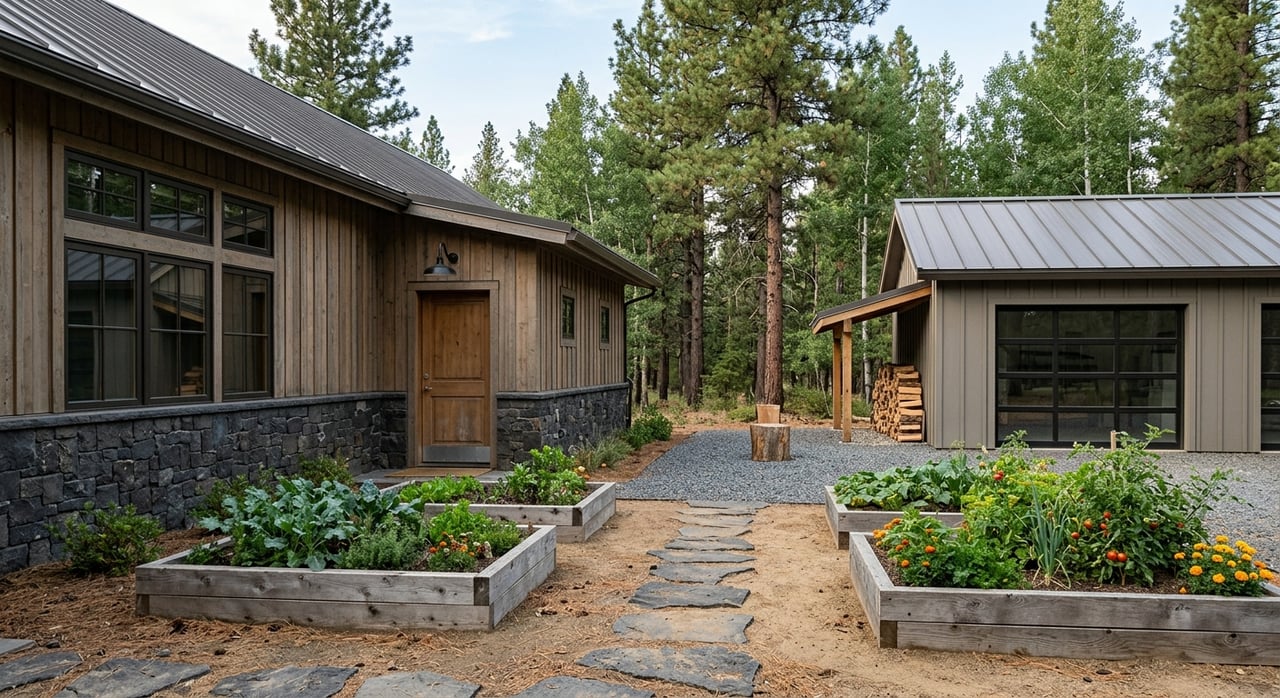
- Raised beds for better soil control and easier planting
- Season extension tools for short growing windows
- Native or climate-adapted plants
- Water-efficient irrigation systems
- Outdoor layouts that separate daily living areas from working garden space
These choices can make your property more productive and easier to maintain. They also tend to support the calm, intentional rural lifestyle many Tumalo buyers want in the first place.
Wildfire Readiness Belongs in the Design
In Tumalo, wildfire planning should be part of your property design from day one. Deschutes County says R327 fire-hardening requirements apply to all new dwellings and new accessory structures in unincorporated county areas beginning April 1, 2026.
The Oregon State Fire Marshal recommends treating the first five feet around a structure as a noncombustible buffer. Clear driveway access and reduced ladder fuels are also key parts of defensible-space planning.
For hobby farm buyers, this matters because outbuildings, fencing, equipment areas, landscaping, and access routes all need to work together. A well-designed property can feel rural and attractive while still being easier to protect.
Ongoing Maintenance Matters Too
Wildfire readiness is not only about construction. Deschutes County’s FireFree program offers free yard-debris drop-off events to help residents maintain defensible space.
That makes regular cleanup part of smart long-term ownership. If you are planning orchards, garden beds, natural landscaping, or accessory structures, think beyond installation and consider the maintenance rhythm the site will require.
Do Not Assume a Guest Unit Is Allowed
Many buyers looking at acreage want separate living space for guests, extended stays, or flexible use. In Tumalo, you should verify this carefully before making assumptions.
Deschutes County states that accessory dwelling units are allowed only in rural residential exception areas, and those do not include unincorporated communities such as Tumalo. That means additional living space should be evaluated on a site-specific basis under current zoning and onsite wastewater rules.
This is a good example of why early due diligence matters. If a secondary unit is part of your vision, it should be one of the first items you review, not an idea you save for later.
Tumalo Offers Rural Living Close to Bend
Part of Tumalo’s appeal is that it feels rural without feeling remote. The community plan notes access to U.S. 20, local businesses, district offices, Tumalo Community School, and Tumalo State Park, all of which help create a local hub for residents and visitors.
At the same time, the county also notes that north-south street connections can be challenging because U.S. 20 carries significant traffic through the community. For buyers, that means lifestyle planning should include not just acreage and views, but also daily access and how a property connects to the places you visit most.
In simple terms, Tumalo works best for buyers who want country-close-to-town living. You can enjoy a more spacious setting while staying connected to Bend and the broader Central Oregon lifestyle.
Keep Future Infrastructure in Mind
A Tumalo purchase should be evaluated for both present use and future context. In July 2024, Deschutes County accepted the petition to form the Tumalo Basin Sewer District, and the county has noted that a feasibility study was completed because the community still relies on onsite wastewater systems.
That does not change the current parcel-by-parcel reality today, but it does suggest that infrastructure conversations in Tumalo are active. If you are buying with a long time horizon, it is wise to consider how future utility changes could affect usability, value, or planning over time.
What an Ideal Tumalo Hobby Farm Looks Like
The best Tumalo hobby farm is rarely the one with the most dramatic first impression. More often, it is the property where the details support the lifestyle you want without constant compromise.
A strong fit may include:
- Zoning that aligns with your intended use
- A workable water source, whether district water, a private well, or irrigation access
- Septic capacity and usable site layout
- Space for gardens, outbuildings, and circulation that respects setbacks
- A landscape plan suited to Central Oregon’s dry, short growing season
- Fire-aware design for structures and surrounding areas
- Convenient access to Bend while preserving a rural feel
When those elements come together, Tumalo can offer a thoughtful version of hobby farm living that feels both aspirational and practical.
If you are considering acreage or a custom rural property in Tumalo, working with an experienced local advisor can help you sort through the details that are easy to miss online. Lisa Cole brings decades of Central Oregon market knowledge and a clear, disciplined approach to helping buyers find properties that truly fit their lifestyle goals.
FAQs
What makes Tumalo a good place for a hobby farm lifestyle?
- Tumalo offers a rural residential setting with space, agricultural uses that may fit the parcel and zoning, and convenient access to Bend, making it appealing for buyers who want country living without full isolation.
What zoning should you check for a Tumalo hobby farm property?
- In Tumalo, TuR and TuR5 are especially relevant zones to review because they affect minimum lot size, permitted uses, and how the property may function for residential and agricultural purposes.
What should you know about water on a Tumalo acreage property?
- A Tumalo property may have district water, a private well, irrigation access, or some combination of these, and each option can affect gardening, outdoor use, and overall site potential.
Why does septic matter when buying land in Tumalo?
- Tumalo relies on onsite wastewater systems, and the parcel’s soils, size, and usable layout can affect whether a standard septic system works or whether alternative treatment may be needed.
Can you add an ADU to a property in Tumalo?
- You should not assume an ADU is allowed in Tumalo, because Deschutes County says ADUs are allowed only in rural residential exception areas and those do not include unincorporated communities such as Tumalo.
How should you plan a garden for Tumalo’s climate?
- A successful Tumalo garden usually accounts for cold winters, hot days, low humidity, short growing seasons, and limited natural precipitation by using water-efficient and season-extending strategies.